


An overloaded airplane will not fly.
When a truck is overloaded, its springs break.
When heavy snow builds up on bushes, the branches break.
When we have too many obligations, when we try to do too many things, we might cope successfully for a period of time, but, long-term, we break.
Implications of Overload
When we are overloaded, we’re less apt to consider our ways. It’s harder to listen. We’re more likely to be angry. We are likely to snap at interruptions, refuse new opportunities, and crumble with crises.
When I was working, day after day, week after week, there would be little or no “white space,” times on my calendar without an obligation. Without sufficient time to reflect, I was less effective, and I misinterpreted opportunities as avoidable interruptions.
Many of us, whether or not we’re working, live our entire lives that way, with long to-do lists, and constant pressure. We schedule our lives from dawn to bedtime, sleep coming long after sunset. Our families suffer. Our health suffers. We’re emotionally depleted. When (not if) we’re confronted with unexpected opportunities or crises, we can come apart.
We might be like a juggler who can comfortably handle 5 balls, but who drops all of them when a sixth ball is thrown to him.
On the other hand
Jesus never told someone He didn’t have time.
He never seemed to be in a hurry.
Jesus’ life was full of interruptions that were opportunities to explain God’s kingdom, to call for repentance, to demonstrate the Father. (See Interruption or Opportunity?) He responded, in the moment, to whatever the Father sent Him.
He had the disciples come away to rest. (Mark 6: 31)
How can we be more like Jesus?
Margin; Breathing Room; White Space
It is vital that we have sufficient unscheduled time. Some call this “margin,” others call it “breathing room,” or “white space.”
With margin, we are more apt to be spontaneous, welcome opportunities, have strength for crises.
Having margin is not sloth. It is actually a tool to increase our effectiveness.
Creating Margin
One of my lessons in retirement is that there is still more to do than there is time. Prioritization is still required. I still have to say “No,” to some good things in order to have time and energy for the best things.
And I am newly conscious of the need to leave ample unplanned time, “white space” for rest, the unexpected call, or the unforeseen crisis. We need emotional and physical energy in reserve to do our best.
Overloading ourselves is not an effective long-term strategy.
Instead, overload makes us poor and needy.
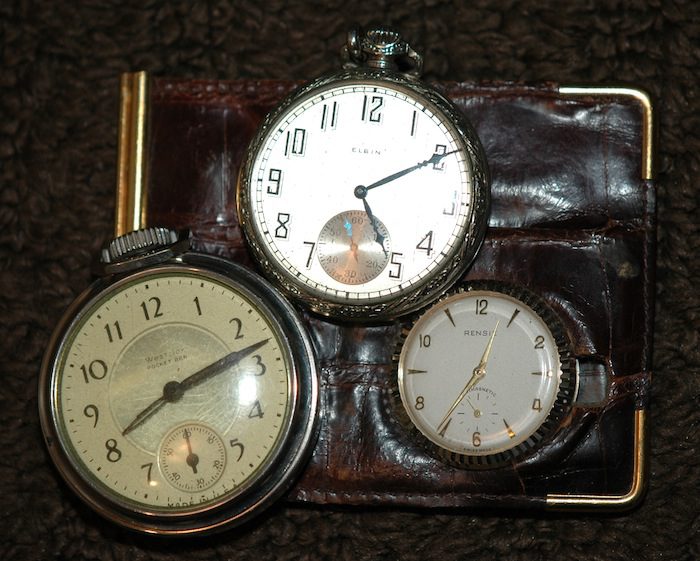
After taking several time management courses, I decided I would not take another unless they guaranteed I would have 25 hours in a day.
Here’s how bad it was: When I was working, my favorite day of the year was the day we switched from daylight savings to standard time. That day, and only that day, had 25 hours. Just one hour made a big difference to me. Sad. Sick. Silly.
Jesus’ Time Managment
Jesus never prayed for 25 hours per day. He was busy, but we never get the sense He hurried. He seemed to take as long as necessary with whoever He was with or whatever He was doing.
Here is one busy Sabbath for Jesus: He taught in the synagogue at Capernaum. In the synagogue, He cleansed a demon-possessed man. He left the synagogue, entered Simon’s house and healed Simon’s mother-in-law. “Now when the sun was setting, all those who had any who were sick with various diseases brought them to Him, and He laid His hands on every one of them and healed them.” Luke 4:31-41.
“And when it was day, He departed and went into a desolate place” (Luke 4:42).
In His last week: “And every day He was teaching in the temple, but at night He went out and lodged on the Mount called Olivet. And early in the morning all the people came to Him in the temple to hear Him” (Luke 21:37-38).
Jesus knew why He had been sent (for example: Luke 4:42-43; Luke 9:21-22; Luke 18:31-33), but didn’t plan out His days in 15 minute blocks.
He did the Father’s work as it came. He initiated some interactions, but generally people came to Him, “He welcomed them and He spoke to them of the kingdom of God and cured those who had need of healing” (Luke 9:11).
Jesus did not do everything He could have done. He did not heal everyone. He didn’t travel the world. He didn’t write a book. But Jesus completed the work the Father had given Him to do. (John 17:4)
Implications for Us
When we become clear about our purpose, it becomes easier to make the most of our time. (Ephesians 5:15-16, Colossians 4:5.)
When we know the work the Father prepared for us (Ephesians 2:10), it becomes easier to discern which interruptions are opportunities and which would take us off course.
Jesus spent many hours in prayer. The days I pray about my “to-do” list, in fact, make my “to-do” list a prayer list, the list often gets shorter, and the days better.
One item that should always be on our “to-do” lists, even for those who don’t prepare “to-do” lists, is to be available to our Lord. We should never be slaves to our plans, but servants to God.
We always should remember there isn’t ever enough time to do everything we might like to do, even for a retiree, but there is always enough time to do what God wants.
Remember, God is not on our schedules. Let’s be on His.

Are you stuck?
Most of us have gotten stuck in the past at one time or another; sometimes for long periods of time.
Unfortunately, the past is a very unproductive place to be: it steals opportunity and joy. By affecting today, it diminishes tomorrow as well. It is essential to move on.
But how? Here are some tips from someone who also has been stuck:
Forgive what needs to be forgiven.
Forgiveness is for you. It is in your own best self-interest. Hard? Yes it can be. But forgiving is essential. In instructing the disciples how to pray, Jesus said: “And forgive us our debts, as we also have forgiven our debtors.” Jesus said that if “you do not forgive others, then your Father will not forgive you.” Later, He told a parable that concludes if we don’t forgive from our hearts, the Father will turn us over to the torturers.
But sometimes knowing you need to forgive isn’t enough. The memory of something horrible, something unfair, something hurtful may stymie you.
The key is to choose to forgive even if you don’t feel like it. This is an act of the will. It is a choice. It is not a feeling. God is gracious and often gives us the feelings later. But initially it is a choice which you, in fact, can make. Don’t confuse “can’t” with “won’t.” You can. The question is whether you will.
Here are a few things that might help. Reframe things by separating the person from what the person did. The person who hurt you is a flawed human being. S/he was damaged in some way. What they did had everything to do with the hurt person they were and, perhaps, little or even nothing to do with you. Their intention might have been different than their impact. Remember we are all sinners; we are all living in a fallen world.
Once, when I was stuck and hadn’t yet forgiven the person, I heard the Lord say to me: “If not now, when?” Good question. If you haven’t yet forgiven someone, but know you need to, if you don’t do it now, when will you? I urge you to forgive now and start healing.
Confess what needs to be confessed.
One definition of maturity is that we know which stuff to own. Sometimes adults blame themselves for hurt done to them when they were young children, when it was really solely the problem of the person doing the hurting. The horrible tales of child abuse and neglect, for example, do not require confession on the part of the child, but do require the now-adult to forgive.
However, for hurts later in life, there is usually some contribution by the hurt party, even if it was just denial or failure to confront.
Almost always for those stuck in the past, regardless of how old we were when it happened, there is a need to confess lack of forgiveness. So—back to Step 1
Learn what can be learned.
This step goes along with, but is different than, Step 2. Capturing lessons gives us the opportunity to not only grow and mature ourselves, but gives us the ability to help others in similar spots. It helps us do things differently the next time. It helps bring goodness out of bad.
Forget what lies behind and press forward to what lies ahead.
Paul called himself the chief of sinners. He persecuted, and participated in murder. And yet he was the author of much of the New Testament. He started churches. He preached and exhorted. He is seen as a spiritual giant. He told the Philippians about one thing he did: “…forgetting what lies behind and reaching forward to what lies ahead, I press on toward the goal for the prize of the upward call of God in Christ Jesus.” (Philippians 3: 13b-14)
Someone told a wonderful story about a mistake made by a nephew and how the nephew agonized about what he had done: “If only I hadn’t done that…” The uncle knew his nephew was on the road to healing when the nephew said: “Next time, I’ll…” Monitor your thinking. Are you saying “if only” or are you saying “next time?” “If only” is focused on the past, on regrets, and indicates you’re stuck. “Next time” indicates you have learned from the event and are moving on.
Do your best to forgive. Do your best to understand, confess and learn from how you might have contributed to the situation (and do your best not to take blame that isn’t yours to own). Then move on. Move forward. Train yourself to forget what lies behind and press forward to what lies ahead.
And repeat!
The first four steps are usually not a one-time deal. The deeper the hurt, the more likely all four steps will need to be repeated. That’s okay. The second cycle reveals important information you didn’t have the first time; things you’d forgotten; hurts you couldn’t face the first time; new thoughts about how you might have contributed.
The clue for when to repeat these four steps is when you start thinking more about past events or when resentment or anger resurfaces. Or, sometimes, when you become aware you’ve lost your joy.
My first retinal surgery corrected the underlying problem! I am so grateful. I have visual improvement in that eye already, although it will be “a while” before I know how well I’ll be able to see. Surgery on the other eye is next week.

The retinal surgeon made three holes in my eye, and cut out most of the inside of the eyeball. This is making me better?!
Any surgery makes a hole in the body where there is not supposed to be a hole. This is supposed to make the patient whole?
Yet, in order to become well, surgery may be necessary. Surgery is an example of making it worse to make it better.
Trials, for the Christian, are another example. We experience trials and suffering, which make life worse, but are promised that those very trials and suffering make us better.
We are promised that trials and suffering:
- Produce endurance, leading to character, and character to hope (Romans 5:3-4)
- Produce steadfastness (James 1:2)
- Result in praise and glory and honor at the revelation of Jesus Christ (1 Peter 1:6-7)
We are to:
- Rejoice in our sufferings, anticipating the good to follow (Romans 5:3)
- Count trials all joy, knowing the good results we’ll see (James 1:2)
- Rejoice, knowing we’ll experience joy at the coming of Christ (1 Peter 1:6)
In order to rejoice during trials and suffering, to count trials all joy, to agree to surgery, we must take the long view. The benefits of surgery are expected to outweigh the risks.
Children of God are promised unimaginable joy. That long view is a sure thing.
Rejoice.
Also see Joy in the Journey, How to Get Through It, and What’s So Good about Bad?
My eye trouble was not on my schedule for 2015. Nope.
Vision problems started in December and life won’t get back to normal (Lord, please! Restored vision!) until approximately August.
I had a plan! I had projects I wanted to finish this year and I had hoped to spend time promoting my book. (When Storms Come: Will You be Ready? is due out in June.) Scrapped!
But, who owns my time?
When I was working, interruptions were something to manage, but not eliminate. I blocked out time for focused effort, and disciplined myself to check email less frequently. Each interruption required effort to refocus on my task. And yet, some of the interruptions were actually wonderful opportunities. I was, no doubt, poorer and less useful for not better discerning whether it was an interruption or opportunity.
Jesus’ life was one interruption after another, yet He completed the work the Father gave Him to do. Each interruption recorded in the gospels gives us another glimpse into who Jesus is, and, therefore, who the Father is.
We are told to “make the most of our time.” (Ephesians 5:16) I want to be a good servant and accomplish what He has for me to do, so it’s important to plan, praying for guidance, in order to reach my goals. But if I get stuck on my precious plans, like Martha I miss the best of what He has for me. (Luke 10:38-42)
Because of my eye trouble, I am seeing many people I would not otherwise have met.
Lord, help me be sensitive to opportunities You give me to show Your love and power.
I will continue to plan because I believe that is the path to accomplish what the Lord gives me. But I am taking Corrie ten Boom’s comment seriously. She said she “learned to hold everything loosely, because otherwise it hurt too much when the Father pried it from her hands.”
How about you? Have your plans been disrupted? What are you going to do?

My dad was in the Navy in WWII. When he sailed under the Golden Gate Bridge, heading to war, he said he was relieved to start what must be finished.
In order to finish anything, we must start. We must have our goal in mind, and we must get on with it. If we’re scared, we must do it scared. (See Do it Scared.)
My goal is to hear my Lord say to me: “Well done.” I certainly do better, day by day, when I keep that goal in mind.
Jesus set his face to go to Jerusalem (Luke 9:51), knowing He would suffer and be crucified. But He kept on, day by day, and died so that we might live.
My first eye surgery is this next Wednesday. Yes, I’m apprehensive, even with lots of prayer. But I know retinal surgery is the path to improved vision, or, at least, the path to maintain the vision I still have. Delay worsens my condition.
The Lord God helps me; therefore I have set my face like flint. (Isaiah 50:7) So I am eager to begin what must be finished.
Is there something you must start in order to reach your goal? What are you going to do about it?

This was a hard post to write.
I believe in Jesus Christ, the risen Son of God, and trust Him, and Him alone, to save me and give me eternal life.
My vision is poor due to retinal conditions in both eyes that require surgery. I cannot, by myself, correct my vision. Only God can heal me, and He may use physicians and medicine in the process. I am praying for guidance in selecting the “right” doctor, and will pray for his or her skill and wisdom in treating me. I am praying God restores my vision.
I love God and know He loves me. He is sovereign and I believe whatever happens to my eyesight will be used by Him to make me more into the image of Christ, and to equip me to serve Him.
The Temptation
God’s answer to my prayer for restored vision might be “Yes, now,” “Yes, later,” or “No.” As God’s child I need to submit to Him and be grateful for His answer.But I am still praying for the “Yes, now” answer.
Here is the temptation. My sin, our sin, Eve’s sin, is to want to be like God, to be self-reliant, to be large and in charge.
Do I look to my faith? Or to God, in whom I have faith? Do I need to work myself up to confidence/faith in the outcome I want? If I focus on my faith instead of my God, I am looking to myself.
Do I look to my prayers? Or to God who answers prayers? If I look to my prayers, I might worry about whether my prayers are fervent enough, or eloquent enough, or frequent enough. Would I increase my chances of restored vision if I enlist others to pray for me? Lots of people? Should I seek out prayer chains? Is there safety in numbers? I might worry whether I am on the “right” prayer chain, or whether enough people are praying for me. Or whether the “right” people are praying for me.
My faith doesn’t save me. Jesus Christ saves me. My prayers won’t, in themselves, result in improved vision. My sovereign, loving God determines my vision.
Looking to my faith or my prayers is a reflection of deep-set sin, wanting to be like God and looking to myself for the answers.
Submission
Do I want God’s best for me? Or do I want restored vision? I want both. But what if God’s best for me is not restored vision? Or worse?
Am I willing to consistently pray for restored vision, but end my prayer as Jesus did in the Garden of Gethsemane, saying, “Yet not my will, but Yours be done.”
The cynical side of me says I might as well since I am totally out of control anyway.
But as a child of God, I want to please my loving Father, who wants the best for me. I want a humble faith.
Father, I am totally dependent on You. I intellectually know that whatever happens will bring good in my life, both now and for eternity. You know I long for restored vision. Help me want, even more, whatever You want for me. Please help me pray, and mean it, “not my will, but Yours be done.”

I really need a good talking-to.
Yep. And I’m not alone.
David, the sweet singer of Israel, reminded himself to bless the Lord and not to forget all His benefits.
“Bless the Lord, O my soul, and forget none of His benefits” (Psalm 103:2)
David then enumerated some of God’s benefits, from forgiveness to steadfast love.
Another psalmist asked himself why he was in despair and reminded himself that he would again praise God.
“Why are you in despair, O my soul? And why have you become disturbed within me? Hope in God, for I shall again praise Him for the help of His presence.” (Psalm 42:5)
The 77th Psalm begins with the psalmist’s soul refusing to be comforted. But, then, he gave himself a good talking-to: he remembered all God’s wonders, His deeds, His holiness, and His strength. He remembered His redemption. He meditated on God.
We’re blessed to remember
We are blessed if our delight is in the Lord (Psalm 1).
We are told to study the works of God (Psalm 111:2).
We are comforted to remember Him (Psalm 119:52).
We are to remember Christ’s sacrifice. (Luke 22:19)
We are to put on the whole armor of God to stand firm in these troubled times, and first, we fasten on the belt of truth. (Ephesians 6:10-15)
Focusing on the truth alters our perspective and rearranges our attitude.
My Talking-To
When I was first diagnosed with retinal eye issues, I gave myself a talking-to, reminding myself of:
- God’s sovereignty and love (See Practical Exam).
- My position with God because of my faith in Christ (See Christian Rights and Responsibilities?)
- The Lord singing over me (See The Lord Sings Over Us).
- God bringing good out of apparent bad (See What’s So Good about Bad?).
Really, the list is endless, but I forget and get my eyes off Him and onto my worries.
Clearly, I need a good talking-to.
How about you?

When life goes awry, when temptation comes, the key to victory is focus on the Lord.
Temptation
When Christ was tempted, He didn’t look at the bread, He looked at the Word of God.
“But He answered and said, “It is written, ‘Man shall not live by bread along, but on every work that proceeds out of the mouth of God.’”” (Matthew 4:4)
Suffering
When Paul was imprisoned, he didn’t look at his chains, but at how his circumstances were for the cause of Christ.
“Now I want you to know, brethren, that my circumstances have turned out for the greater progress of the gospel, so that my imprisonment in the cause of Christ has become well known throughout the whole praetorian guard and to everyone else, and that most of the brethren, trusting in the Lord because of my imprisonment, have far more courage to speak the word of God without fear.” (Philippians 1:12–14)
Anxiety
When you’re anxious, don’t look at your situation, but to pray.
“Be anxious for nothing, but in everything by prayer and supplication with thanksgiving let your requests be made known to God. And the peace of God, which surpasses all comprehension, will guard your hearts and your minds in Christ Jesus.” (Philippians 4:6–7)
How
- Catch yourself looking at the wrong things, e.g. focusing on your pain, or your disappointment, or your worries.
- Train yourself to stop whenever you feel other than positive or neutral.
- Remind yourself of God’s sovereignty and love for you. You don’t understand what is going on, you are suffering, but God is in control and will bring good out of whatever is happening (or will happen).
- Set your mind on God’s interests, not your own. (Mark 8:33)
- “Set your mind on the things above, not on the things that are on earth.” (Colossians 3:2)
- Speak to yourself “in psalms and hymns and spiritual songs, singing and making melody with your heart to the Lord.” (Ephesians 5:19)
- “Let the word of Christ richly dwell within you, with all wisdom teaching and admonishing one another with psalms and hymns and spiritual songs, singing with thankfulness in your hearts to God.” (Colossians 3:16)
- Pray.
Prepare
It is easier to keep your focus on the Lord if you saturate your mind with Him. This is not a “little dab will do ya,” this is a continual, intentional activity and frame of mind.
- Habitually study the Word of God.
- Habitually read, listen, and watch what informs you about the Lord and which draws you closer to Him.
- Dwell on what is true, honorable, right, pure, lovely, of good repute, excellent, or worthy of praise. (Philippians 4:8)
- Memorize scripture and (good) hymns. Storing scripture and hymns in your heart helps “the word of Christ richly dwell within you,” and enables you to pull out the truth at any time.
- Pray without ceasing, keeping your focus where it belongs, on your all-sufficient Lord.
Practice
Don’t leave the world, or leave your secular job. Instead, do everything for the glory of God. (1 Corinthians 10:31) It is possible to grow in Christ in the midst of our daily routines. We have to be in the world, but we do not have to be like the world.
Focusing on the Lord through life’s daily challenges takes practice. Do the best you can day by day. You’ll see growth. Guaranteed.
Receive Updates
Sign up here to receive blog posts via email. I promise I will never share your email address. You may unsubscribe at any time.
* indicates required
When Storms Come: Will You Be Ready?
When Storms Come: Will You Be Ready? helps Christians not fear bad news, shows them how to handle current trouble, and helps them emerge stronger on the other side.
About me
I'm a Christian, wife, retiree, and author.
I love studying and putting knowledge into action. I'll share what I'm learning, encourage you, and urge all of us to press on to become more like Christ.
 Pressing On Together
- Live for God’s glory August 23, 2026We were created for God’s glory. Which means we are to glorify God. (See Created for God’s Glory) The first step is to repent and believe in Christ. Salvation is essential. Until a person has received Christ as Lord and Savior, that person and God are enemies. (Romans 5:10) But! Once we are saved, we… […]Pressing On Together
- Created for God’s Glory August 16, 2026Humans were made to glorify God.* Everyone who is called by My name, and whom I have created for My glory, whom I have formed, even whom I have made. (Isaiah 43:7) Some, though, have rejected God. (Romans 1:18-32) But some of us have repented, and have believed in Jesus Christ and the God who… […]Pressing On Together
- Live For His Name’s Sake August 9, 2026God acts for His Name’s sake. “God, for the sake of His Name, to act consistently with His holiness, to honor Himself, He absolutely will make His redeemed into the image of Christ. He absolutely will bring us to glory. He has all the power and authority to do so. He has committed to do… […]Pressing On Together
- For My Name’s Sake August 2, 2026God is more holy, glorious, powerful, wise, and more, than we can imagine. He is creator. He is judge. He is …. In Scripture, we specifically are told that He did something for the sake of His Name. “His Name” is all who God is. His Name is His whole character, His nature, His attributes,… […]Pressing On Together
- God Does Not Change July 26, 2026This is awesome good news! God is holy. God is perfect. God cannot get more holy or more perfect. (And, of course, God does not get worse.) God does not change. There are a lot of implications of this, but right now I am thinking about God’s unchangeable love for His redeemed. We have all… […]Pressing On Together
- Endure with Hope July 19, 2026Just past those sand dunes is the Pacific Ocean! Endure with hope. For the joy set before Him, Christ endured the cross. Jesus, the author and perfecter of faith, who for the joy set before Him endured the cross, despising the shame, and has sat down at the right hand of the throne of God.… […]Pressing On Together
- God’s Love in Us July 12, 2026God’s Passionate Love has been poured out in us, His redeemed, believers in Christ! The love of God has been poured out within our hearts through the Holy Spirit who was given to us. (Romans 5:5) Amazing grace! We are to walk in love Be imitators of God, as beloved children; and walk in love,… […]Pressing On Together
- God’s Loving Purpose July 5, 2026You may be in tremendous emotional or physical pain. The possible causes are too many to list, but, if you have been redeemed, if you have received Jesus Christ as Lord and Savior, then God has a loving purpose for what you are going through. Remember: God loves you with an infinite, eternal, steadfast, all-knowing… […]Pressing On Together
- God’s Passionate Love June 28, 2026God—Father, Son, Holy Spirit—loves us* immensely more than we can fathom. If only we* knew how much, everything would be different. We would have joy abounding, NO anxiety, confident expectation that God was working everything for our glorification, and much much more. Because God loves us*, we have eternal life. For God so loved the… […]Pressing On Together
- Somebody’s Praying for You June 21, 2026Have you heard the song: Somebody’s Praying for Me? Several artists have recorded it, and it is easy to find on YouTube (original and shorter versions). My favorite is Ricky Skaggs Somebody’s Prayin. I find the song comforting, inspiring, and encouraging. Many or most of us (but probably not all of us) have somebody… […]Pressing On Together